Blog

Leading Multigenerational Teams in Asia: A Practical Guide

LEADERSHIP GUIDE • MALAYSIA & SINGAPORE Summary • 4 Min Read

A 58-year-old supervisor and a 23-year-old graduate, one team, two very different worlds. In Asian workplaces, respect for seniority makes the gap even wider. Discover how each generation works best, and 5 practical ways to turn age differences into team strength.

4 Generations Compared 5 Leadership Practices Friction Self-Check
58 yrs
Senior Supervisor
42 yrs
Manager
33 yrs
Executive
23 yrs
Graduate

In many workplaces today, a 58-year-old supervisor, a 42-year-old manager, a 33-year-old executive and a 23-year-old graduate share the same team.

Each grew up in a different world. They have different expectations about authority, communication, loyalty and work-life balance. In Asian workplaces, where respect for seniority runs deep, these differences can become especially visible.

The result? Misunderstandings. Seniors may see juniors as impatient. Juniors may see seniors as rigid. The real problem is usually not age. It is assumptions.

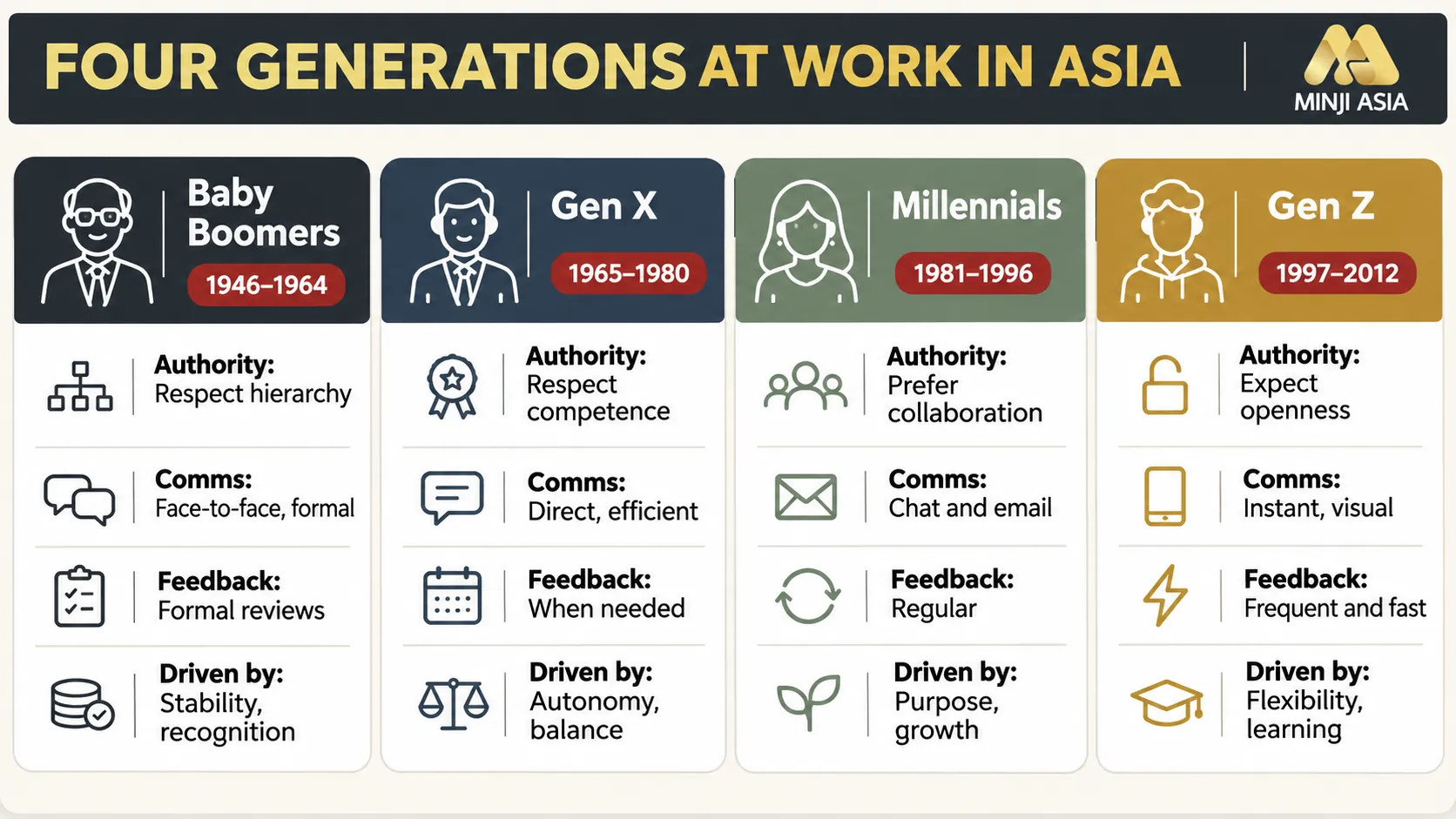
A quick look at the generations

These are general tendencies, not rules. Every individual is different, but understanding common patterns helps leaders adapt.

INTERACTIVE GENERATION EXPLORER Select a cohort to compare motivators & friction points
What They Value
Stability, recognition
View of authority: Respect hierarchy
How They Communicate
Face-to-face, formal
Feedback cadence: Formal reviews
Common Friction Point: May see rapid chat-based decisions as disrespectful to seniority, or feel pushed aside during sudden tool changes.
Leader Bridge: Consult their institutional experience directly and introduce new tools with clear business context and structured support.
What They Value
Autonomy, balance
View of authority: Respect competence
How They Communicate
Direct, efficient
Feedback cadence: When needed
Common Friction Point: Often squeezed in the middle—frustrated by unnecessary meetings above and constant hand-holding requests below.
Leader Bridge: Keep updates crisp, respect their time and autonomy, and clarify which channels belong to urgent decisions versus routine check-ins.
What They Value
Purpose, growth
View of authority: Prefer collaboration
How They Communicate
Chat and email
Feedback cadence: Regular
Common Friction Point: Asking "why" or wanting faster progression can be misread by senior supervisors as impatience or questioning authority.
Leader Bridge: Explain the purpose behind goals, hold regular development check-ins, and position them as bridges between senior and junior staff.
What They Value
Flexibility, learning
View of authority: Expect openness
How They Communicate
Instant, visual
Feedback cadence: Frequent and fast
Common Friction Point: Often stay silent in hierarchical meetings to avoid offending seniors, while missing the frequent feedback they need to stay confident.
Leader Bridge: Invite their perspective openly in meetings, offer quick real-time coaching, and empower them to share digital tools via two-way mentoring.
Focus Area Baby Boomers Gen X Millennials Gen Z
Approximate birth years 1946–1964 1965–1980 1981–1996 1997–2012
View of authority Respect hierarchy Respect competence Prefer collaboration Expect openness
Communication Face-to-face, formal Direct, efficient Chat and email Instant, visual
Feedback Formal reviews When needed Regular Frequent and fast
Motivation Stability, recognition Autonomy, balance Purpose, growth Flexibility, learning

Five practical tips for leaders

TIP 01 • CORE PRINCIPLE

1. Lead individuals, not labels

Use generational insight as a starting point, not a stereotype. Ask each person how they like to communicate and receive feedback.

TIP 02 • MEETING EQUITY

2. Respect experience and fresh ideas

In Asian cultures, openly challenging a senior can feel uncomfortable. Create meetings where seniors share experience and juniors share new perspectives, with equal value.

TIP 03 • MUTUAL EXCHANGE

3. Use two-way mentoring

Pair experienced staff with younger employees. Seniors pass on industry knowledge and relationships; juniors share digital skills and new tools. Both groups gain respect for each other.

Senior Wisdom ⇄ Junior Digital Fluency
04

4. Mix communication channels

Not everything belongs in a chat group, and not everything needs a meeting. Agree on which channel to use for what, such as urgent issues, updates and decisions.

05

5. Agree on shared team values

Differences matter less when everyone commits to the same core values, such as respect, accountability and helping each other succeed. Define them together.

Warning signs of generational friction

INTERACTIVE SELF-CHECK
Click any warning sign you have observed in your team to reveal a first-step fix.
0 / 4 spotted
SIGN 01 • GROUPING Check
Cliques forming by age group
Action: Mix project pairs across age brackets so trust forms through shared delivery rather than hallway habits.
SIGN 02 • "US VS. THEM" LANGUAGE Check
Comments like "young people today" or "old-school thinking"
Action: Catch age labels early and gently shift the focus to specific work habits, expectations, and shared standards.
SIGN 03 • ONE-WAY MEETINGS Check
Juniors staying silent in meetings
Action: Ask junior members for input first or invite written ideas ahead of senior commentary to protect face and surface insights.
SIGN 04 • PROCESS PUSHBACK Check
Seniors resisting new tools or processes
Action: Pair digital tools with private two-way mentoring rather than public mandates so senior leaders feel supported, not exposed.
If you notice these, address them early through open conversation and team building, not just instructions.

Key takeaways

✓ Generational differences are real, but individuals matter more.
✓ Asian respect for seniority adds a unique layer.
✓ Two-way mentoring builds mutual respect.
✓ Shared values unite teams across ages.
LEAD EVERY GENERATION WITH CONFIDENCE

Building a stronger team across generations?

Minji Asia's team development workshops help leaders and teams understand each other, communicate better and work as one.

Leave a Reply

Your email address will not be published. Required fields are marked *