

Blog
Leading Multigenerational Teams in Asia: A Practical Guide


A 58-year-old supervisor and a 23-year-old graduate, one team, two very different worlds. In Asian workplaces, respect for seniority makes the gap even wider. Discover how each generation works best, and 5 practical ways to turn age differences into team strength.
In many workplaces today, a 58-year-old supervisor, a 42-year-old manager, a 33-year-old executive and a 23-year-old graduate share the same team.
Each grew up in a different world. They have different expectations about authority, communication, loyalty and work-life balance. In Asian workplaces, where respect for seniority runs deep, these differences can become especially visible.
The result? Misunderstandings. Seniors may see juniors as impatient. Juniors may see seniors as rigid. The real problem is usually not age. It is assumptions.
A quick look at the generations
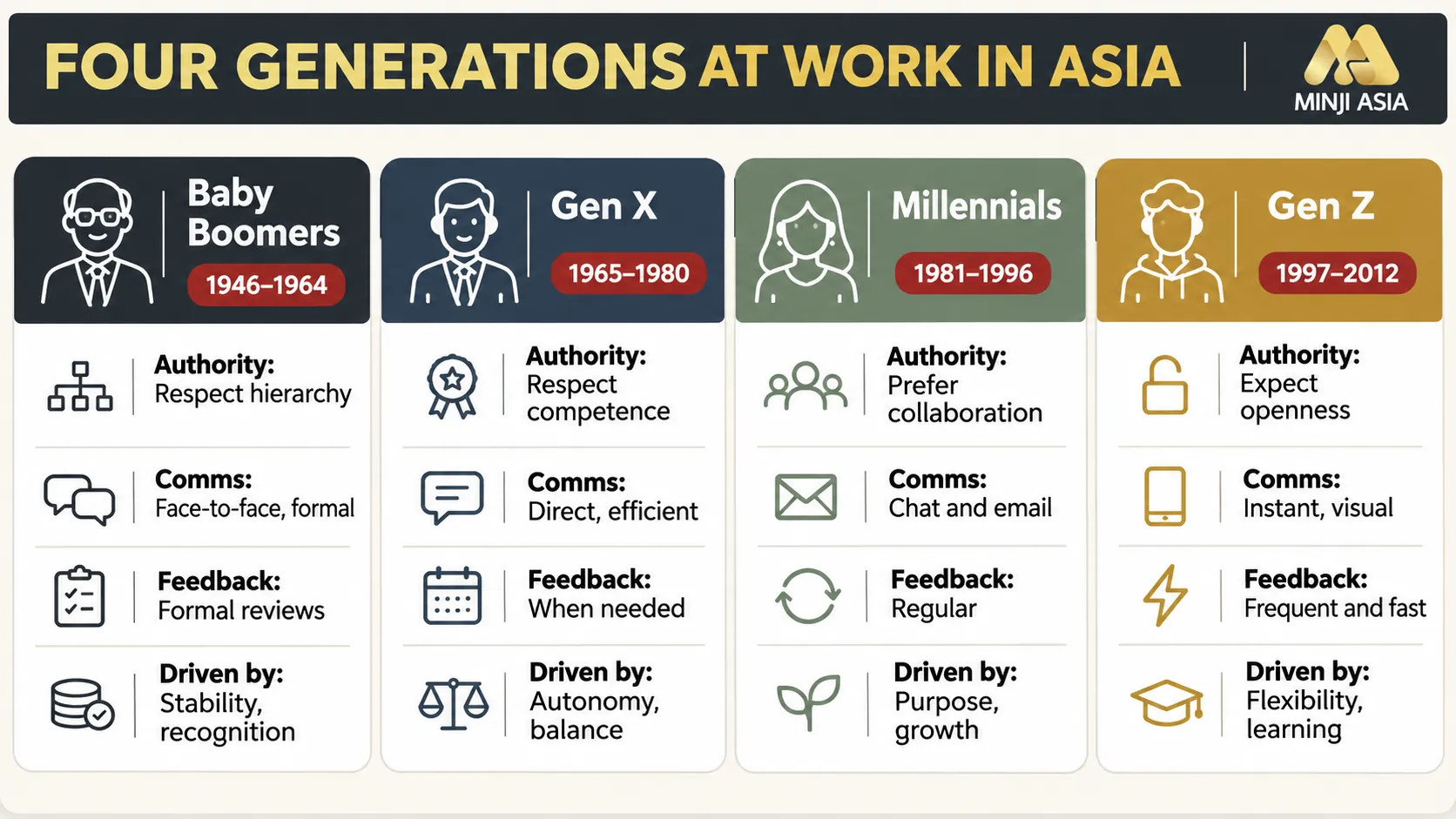
These are general tendencies, not rules. Every individual is different, but understanding common patterns helps leaders adapt.
| Focus Area | Baby Boomers | Gen X | Millennials | Gen Z |
|---|---|---|---|---|
| Approximate birth years | 1946–1964 | 1965–1980 | 1981–1996 | 1997–2012 |
| View of authority | Respect hierarchy | Respect competence | Prefer collaboration | Expect openness |
| Communication | Face-to-face, formal | Direct, efficient | Chat and email | Instant, visual |
| Feedback | Formal reviews | When needed | Regular | Frequent and fast |
| Motivation | Stability, recognition | Autonomy, balance | Purpose, growth | Flexibility, learning |
Five practical tips for leaders
1. Lead individuals, not labels
Use generational insight as a starting point, not a stereotype. Ask each person how they like to communicate and receive feedback.
2. Respect experience and fresh ideas
In Asian cultures, openly challenging a senior can feel uncomfortable. Create meetings where seniors share experience and juniors share new perspectives, with equal value.
3. Use two-way mentoring
Pair experienced staff with younger employees. Seniors pass on industry knowledge and relationships; juniors share digital skills and new tools. Both groups gain respect for each other.
4. Mix communication channels
Not everything belongs in a chat group, and not everything needs a meeting. Agree on which channel to use for what, such as urgent issues, updates and decisions.
5. Agree on shared team values
Differences matter less when everyone commits to the same core values, such as respect, accountability and helping each other succeed. Define them together.

Warning signs of generational friction
Key takeaways
Building a stronger team across generations?
Minji Asia's team development workshops help leaders and teams understand each other, communicate better and work as one.