Blog

How to Use AI to Improve Your Skills: 6 Practical Ways

Summary

Want to improve your professional skills with AI? Discover six practical ways to use AI as your personal coach, from practising difficult conversations and improving communication to building learning plans and preparing for important meetings. Explore ready-to-use prompts, learn how to get more value from AI, and understand why combining AI-powered practice with human coaching is the key to meaningful, lasting growth.


A few years ago, personal coaching was available mainly to senior executives. Today, anyone with a phone can access an AI assistant that explains, questions, role-plays and gives feedback, any time of day.

Used well, AI can speed up your learning dramatically. Used poorly, it becomes just another source of generic information.

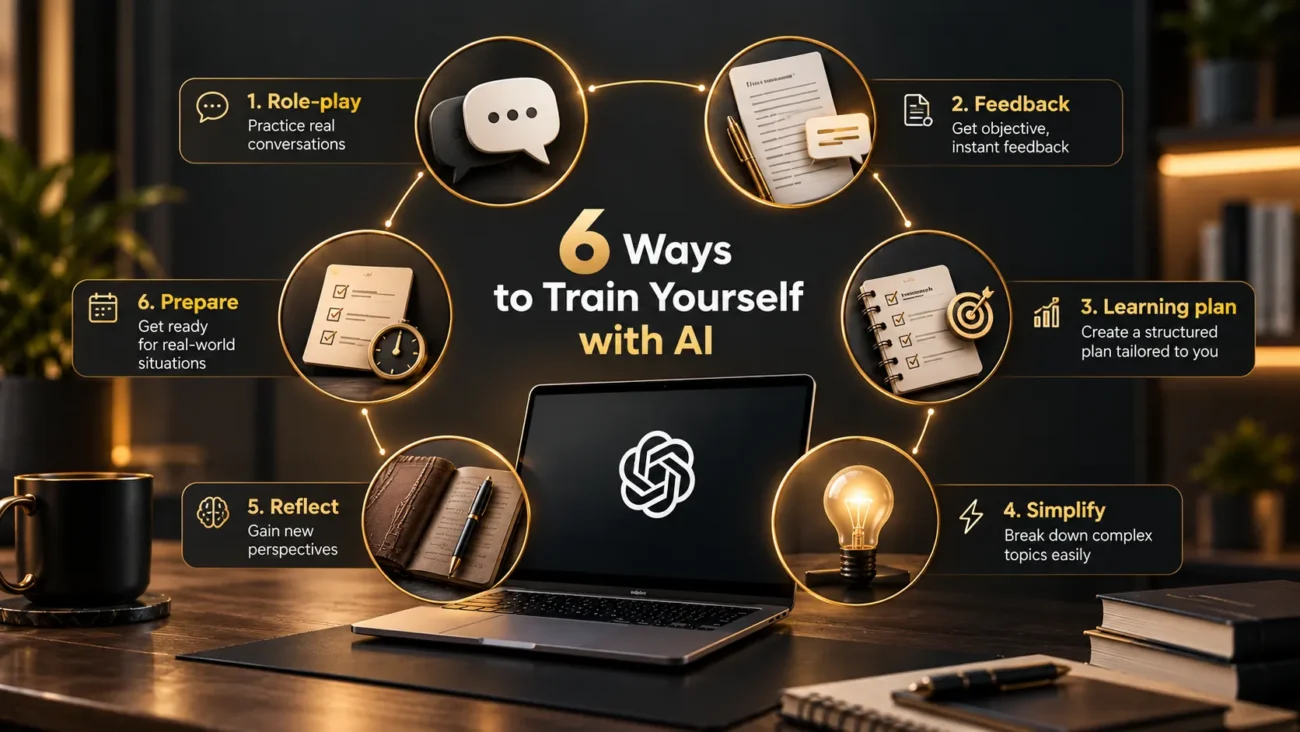
Here are six practical ways to use AI as your personal training partner, with prompts you can copy and adapt.

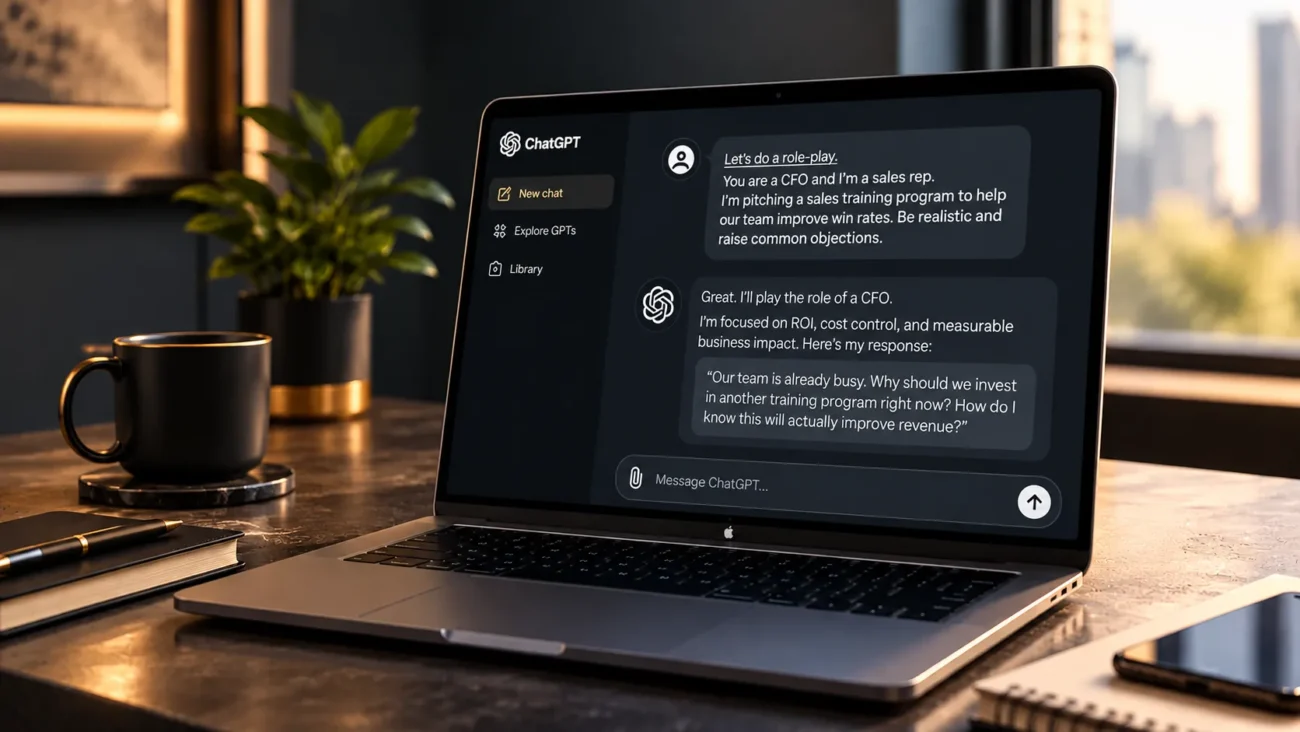
1. Practise difficult conversations through role-play

Ask AI to play a demanding client, an unhappy team member or a tough negotiator. It is a safe space to practise before the real conversation.

TRY THIS PROMPTCopy & Adapt
“Act as a procurement manager who thinks our price is too high. Push back realistically. After 5 exchanges, give me feedback on how I handled the objections.”

2. Get feedback on your writing and presentations

Paste in an email, proposal or presentation outline and ask for specific feedback.

TRY THIS PROMPTCopy & Adapt
“Review this email to a senior client. Tell me what sounds unclear, too long or too weak, and suggest a stronger version.”

3. Build a personal learning plan

Tell AI the skill you want to build, your current level and the time you have. Ask for a structured weekly plan.

TRY THIS PROMPTCopy & Adapt
“I am a new team leader with 20 minutes a day. Create a 4-week plan to improve my delegation and feedback skills, with one small practice task per day.”

4. Learn complex topics in simple language

Whether it is financial reports, a new industry or a management model, ask AI to explain it simply, then gradually go deeper.

TRY THIS PROMPTCopy & Adapt
“Explain this concept as if I am new to it. Then give me 3 questions to test my understanding.”

5. Reflect like you have a coach

After a meeting or a difficult day, use AI to help you reflect. Good questions often matter more than answers.

TRY THIS PROMPTCopy & Adapt
“Ask me 5 coaching questions, one at a time, to help me reflect on a team meeting that did not go well.”

6. Prepare for important moments

Before a presentation, interview or negotiation, ask AI to predict tough questions and help you prepare answers.

TRY THIS PROMPTCopy & Adapt
“I am presenting a budget request to our CEO. List the 7 hardest questions she might ask and help me prepare short answers.”

What AI cannot replace

AI is a powerful practice tool, but it has limits:

1. Workplace Nuance

It does not know your workplace. Culture, politics and relationships need human judgment.

2. Factual Accuracy

It can be wrong. Always check facts, figures and advice before acting on them.

3. Accountability Gap

It cannot hold you accountable. Real change still needs commitment, and often a human coach or manager.

4. Data Confidentiality

Protect confidential information. Never paste sensitive company or client data into public AI tools.

The best approach combines both: AI for daily practice and feedback, plus human coaching for deeper growth and accountability.

Key takeaways

  • AI can act as a role-play partner, reviewer, tutor and reflection coach.
  • Specific prompts produce far more useful results than general questions.
  • Practise with AI before important real-life conversations.
  • Combine AI practice with human coaching for lasting change.

Want to grow faster with the right guidance?

Minji Asia’s coaches help professionals and teams turn practice into real performance, combining modern tools with practical, human coaching.

Leave a Reply

Your email address will not be published. Required fields are marked *