SUMMARY
She had a raise, a good team and a bright future, and she still resigned. Most good employees don’t leave for money. They leave because of their manager, invisible growth and effort nobody notices. Here are 6 hidden reasons, and the one simple conversation that can stop them before the letter arrives.
Aisyah was one of the best executives in her department. She was reliable, well liked and recently given a raise. One Monday morning, she handed in her resignation.
Her manager was shocked. “But we treat her well. The pay is good. What happened?”
This story plays out in companies across Malaysia and Singapore every month. And in most cases, the reason was visible long before the letter arrived. Leaders simply were not looking in the right place.
Salary is rarely the whole story
Pay matters, and an unfair salary will push people out. But when good employees leave companies that pay fairly, the cause is usually something money cannot fix. People often join a company for the package. They leave because of how they feel at work.
Hidden reason 1: Their manager
The direct manager shapes most of an employee’s daily experience. A manager who micromanages, takes credit or never gives feedback can undo everything else the company does well.
✓ What to do: Invest in your managers. Most were promoted for technical skill, not people skill.
Hidden reason 2: No visible future
Talented people want to grow. If they cannot see a next step, new skills or more responsibility, they start looking elsewhere.
✓ What to do: Hold regular career conversations, not only during annual appraisals.
Hidden reason 3: Effort without recognition
When extra effort goes unnoticed, people slowly stop giving it. Then they stop caring, and eventually they leave.
✓ What to do: Recognise specific contributions, quickly and sincerely. It costs nothing.
Hidden reason 4: Overload with no end in sight
Good employees are often rewarded with more work. Over time, the best people carry the heaviest load until they burn out.
✓ What to do: Review workload fairly and notice who is always saying yes.
Hidden reason 5: Unclear roles and expectations
When people are unsure what success looks like, or receive conflicting instructions from different bosses, frustration builds quietly.
✓ What to do: Clarify roles, responsibilities and decision rights. This alone removes a large amount of daily stress.
Hidden reason 6: Feeling unheard
In many Asian workplaces, employees hesitate to voice concerns openly. They may stay silent in meetings, then leave without explaining why.
✓ What to do: Create safe channels for honest input, such as one-to-ones, anonymous surveys and stay interviews.
PROACTIVE RETENTION STRATEGY
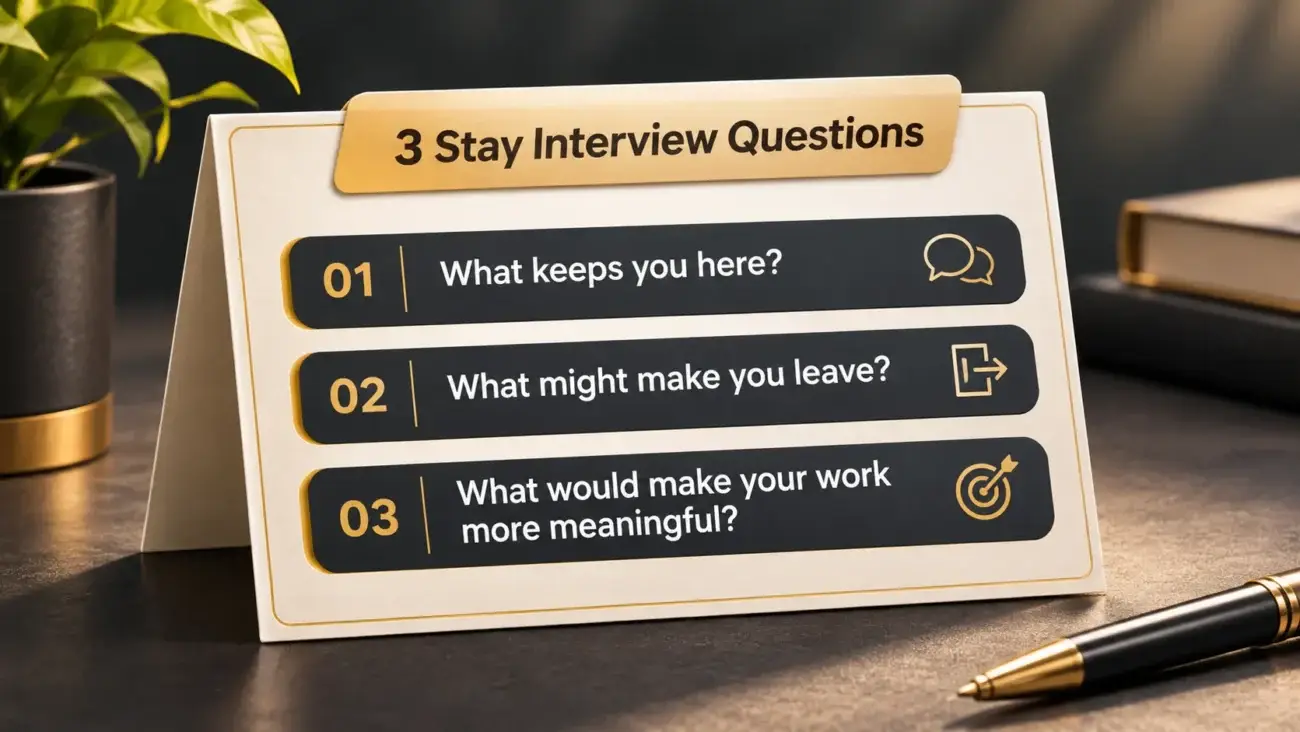
The power of a "stay interview"
Most companies run exit interviews, when it is already too late. A stay interview asks valued employees, while they are still with you:
02. What might make you leave?
03. What would make your work more meaningful?
These simple questions often reveal problems months before a resignation.
✓ Key takeaways
- Good employees usually leave because of experience, not only pay.
- Managers have the biggest influence on whether people stay.
- Growth, recognition, fair workload and role clarity are powerful retention tools.
- Ask why people stay before they decide to go.
Losing good people faster than you can replace them?
Minji Asia helps organisations identify the real causes of turnover and build managers who keep their best people.