Blog

Why Training Doesn’t Stick: 5 Reasons and How to Fix Them

The workshop went well. Participants were energised, the feedback forms were full of "excellent" and everyone left with new ideas.

Three weeks later, nothing has changed. Meetings run the same way. Sales calls sound the same. The same problems keep coming back.

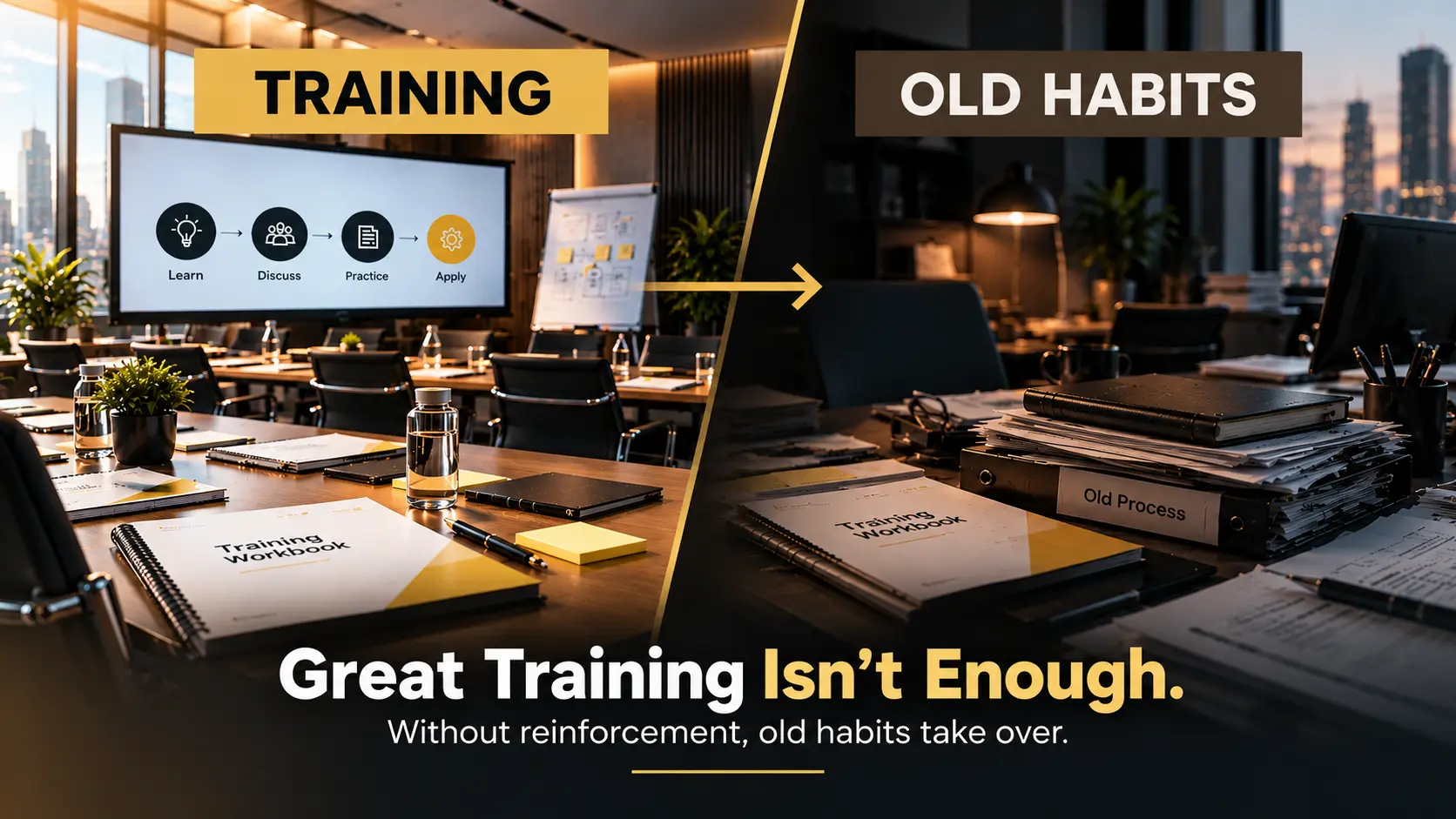
If this sounds familiar, you are not alone. It is one of the most common frustrations HR and business leaders share with us. The good news is that it is rarely the participants' fault. Training fails for predictable reasons, and each one can be fixed.

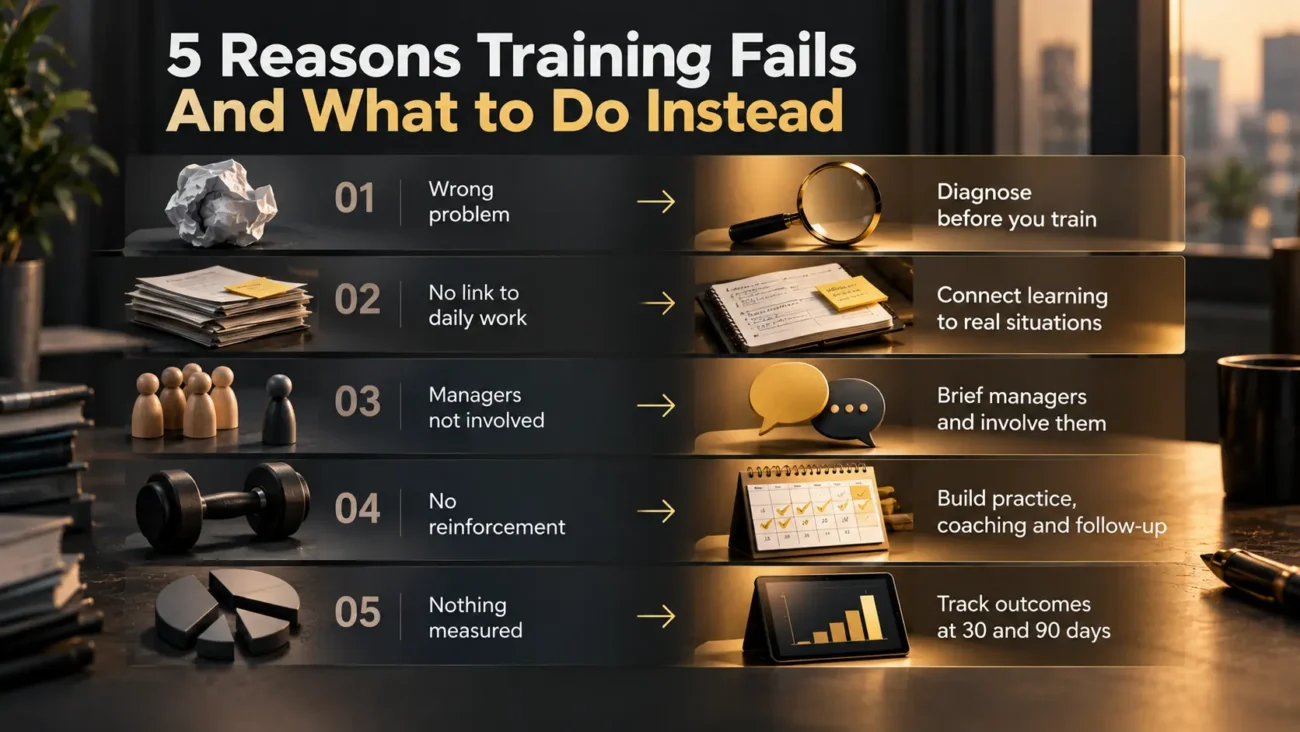
Reason 1: The training solved the wrong problem

Many programs are chosen because a topic sounds useful, not because anyone diagnosed the real gap. A team with a role-clarity problem will not improve after a motivation workshop.

The fix: Diagnose before you train. Talk to managers and participants to find the actual cause of the performance gap.

Reason 2: No link between training and daily work

Participants learn a new approach, then return to a workplace where nothing supports it. Their tools, targets and routines stay exactly the same.

The fix: Before the program, agree on one or two real work situations where each participant will apply what they learn.

Reason 3: Managers are not involved

This is often the biggest factor. If a participant's manager does not know what was taught, does not ask about it and does not model it, the new behaviour quietly fades.

The fix: Brief managers before the training and give them simple follow-up questions to ask. For example: "What did you try this week? What happened?"

Reason 4: One-off events, no reinforcement

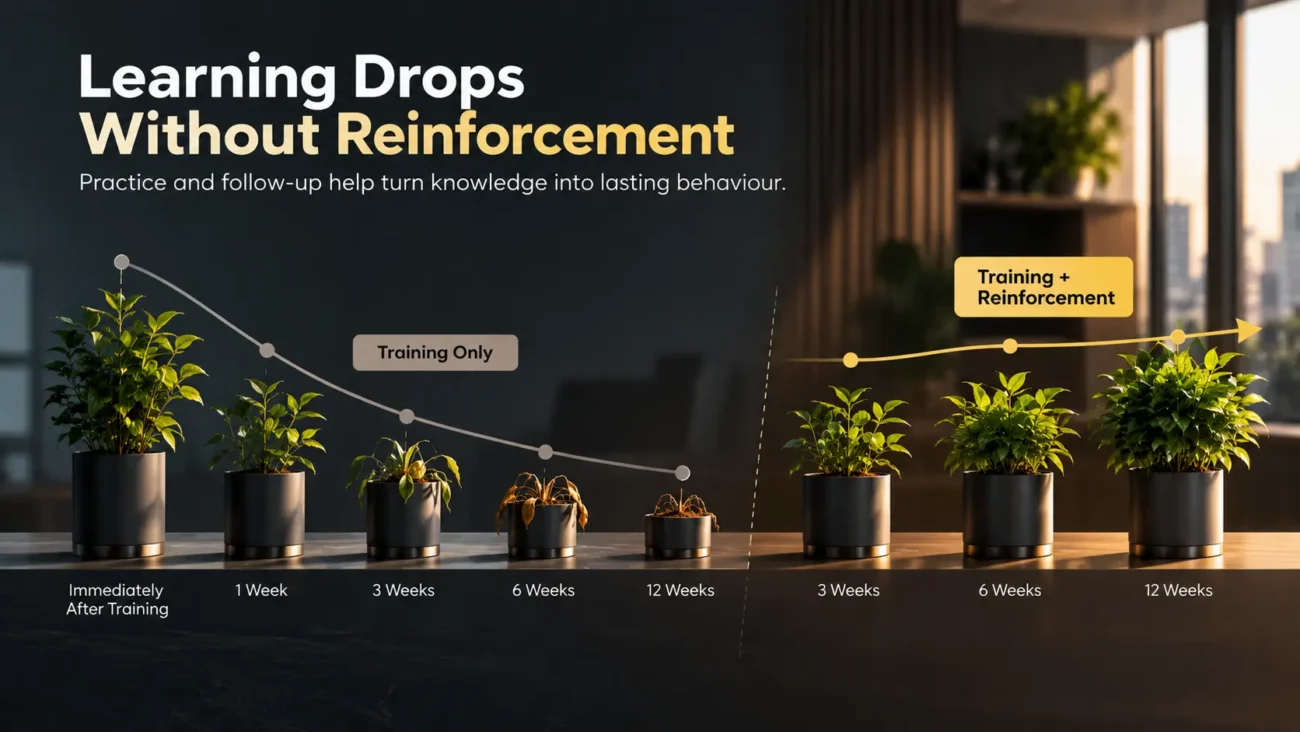
A single day of training is a good start, but new habits need repetition. Without practice, reminders and feedback, people return to what feels comfortable.

The fix: Plan reinforcement from the start, such as short follow-up sessions, peer practice groups or coaching check-ins over the following weeks.

Reason 5: Nobody measures what changed

If the only measure is a satisfaction survey, you know whether people enjoyed the day, not whether they improved. What is not measured is soon forgotten.

The fix: Set one or two clear indicators before the program starts, such as call conversion, meeting efficiency or team engagement, and review them after 30 and 90 days.

A simple formula for training that sticks

Lasting change comes from three stages working together:

  1. Before: Diagnose the real gap and set clear goals.
  2. During: Use practical, relevant exercises based on real work situations.
  3. After: Involve managers, reinforce with coaching, and measure results.
Most organisations invest only in the middle stage. The biggest improvement usually comes from adding the first and last.

Key Takeaways

  • Training rarely fails because of the participants.
  • Diagnosing the real problem is the first step.
  • Managers are the key to lasting behaviour change.
  • Reinforcement and measurement turn a workshop into results.

Want training that actually changes behaviour?

At Minji Asia, every program starts with a consultation to identify the real gaps and ends with follow-up to make sure the learning sticks.

Leave a Reply

Your email address will not be published. Required fields are marked *