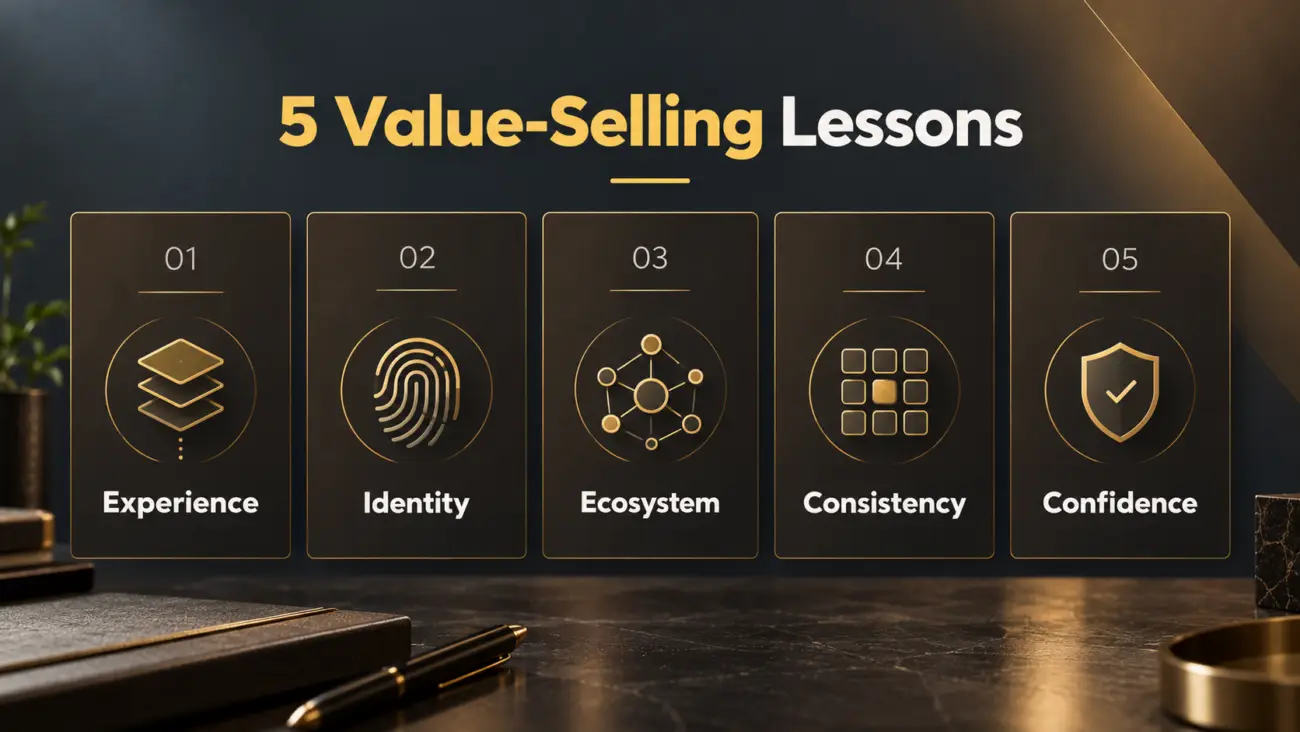
Lesson 1: Sell the experience, not the specifications
Premium brands rarely lead with technical numbers. They talk about capturing family moments, feeling secure and things that simply work.
For your team: Stop opening with features and product lists. Start with what life or business looks like after the client says yes.
Lesson 2: Identity is a powerful buying reason
For many buyers, the phone says something about who they are. People buy products that match the image they want to project.
For your team: Ask what success looks like for your client personally, not just for their company. A manager who wants to be seen as a strong leader buys differently from one who only wants lower costs.
Lesson 3: The ecosystem creates loyalty
Once your photos, apps and devices all connect, switching feels painful. The product becomes part of daily life.
For your team: Build relationships beyond a single sale. Follow-ups, check-ins and useful ideas turn one-time buyers into long-term clients who would not think of switching.
Lesson 4: Consistency builds trust
The store experience, the packaging and the after-sales service all feel the same, everywhere. Consistency tells customers that the brand is reliable.
For your team: Every touchpoint matters, from your first message to your proposal to how you handle a complaint. One sloppy email can undo a great meeting.
Lesson 5: Confidence in your price signals quality
Premium brands rarely discount heavily. That confidence tells buyers the product is worth the price.
For your team: Salespeople who apologise for their price, or discount at the first sign of hesitation, teach clients that the price was never real. Hold your value and explain it.